
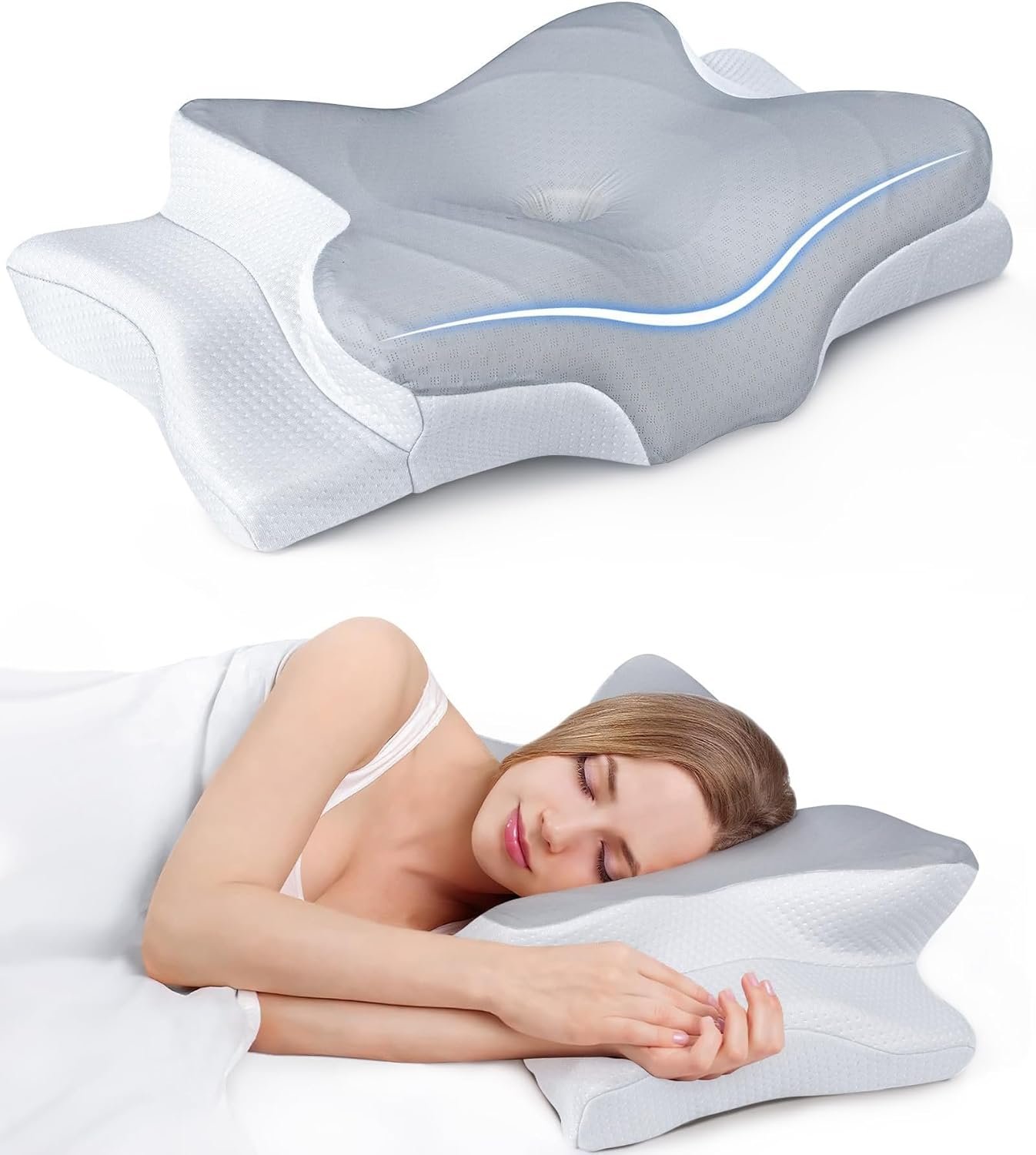
If you’ve ever rolled out of bed clutching your neck, wondering how a night’s “rest” left you feeling worse than when you laid down, you’re not alone — and you’re not stuck with it. The culprit is usually simpler than people think: the pillow. A flat, shapeless pillow forces your neck out of alignment for eight hours straight, and no amount of stretching the next morning fully undoes that. The fix isn’t a new mattress or a chiropractor appointment — it’s rethinking what a pillow is actually supposed to do.
The Problem With “Regular” Pillows
Most pillows are built for softness, not support. They puff up, flatten out, and leave your head tilted at whatever angle gravity decides. Your cervical spine — the seven vertebrae that run through your neck — needs to stay in a gentle, natural curve while you sleep. When a pillow can’t hold that curve, your neck muscles spend the night compensating, which is exactly how people wake up stiff, sore, or nursing a dull headache that lingers into the afternoon.
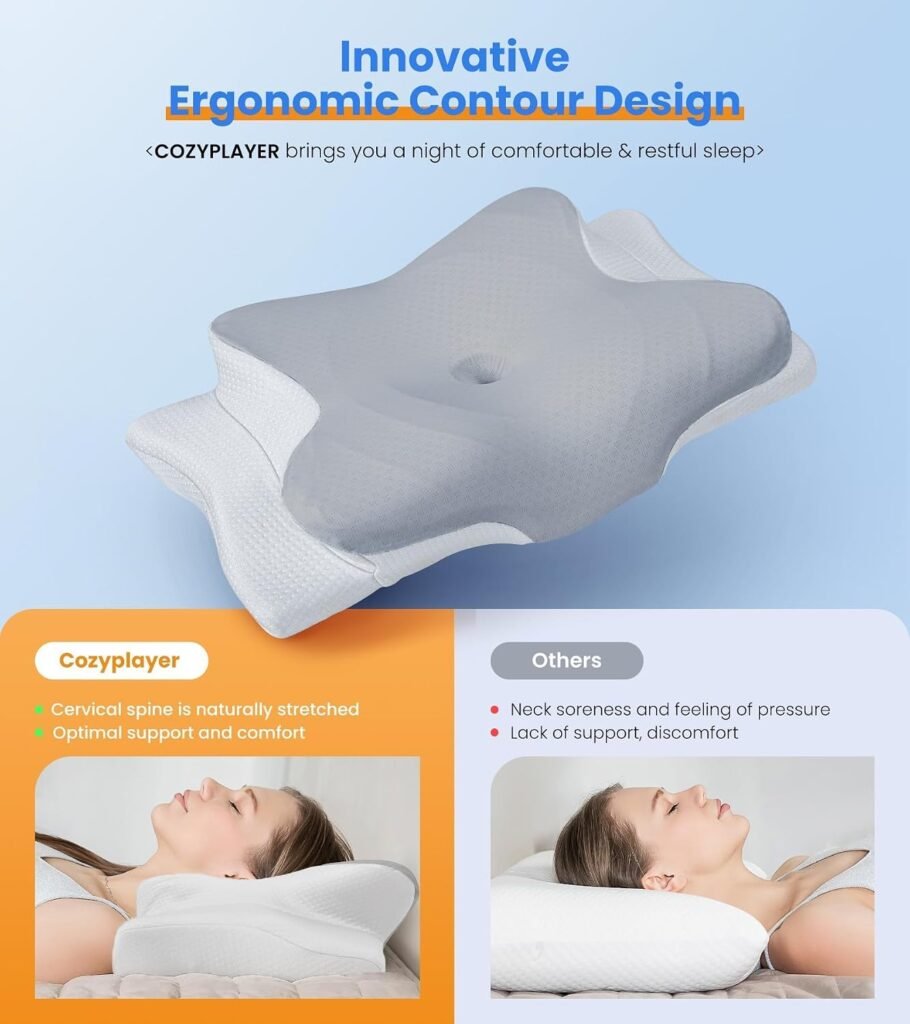
A Pillow Designed Around the Shape of You
This is where a genuinely ergonomic, hollow-contour cervical pillow changes the equation. Instead of a flat surface, it uses a concave center set at a gentle angle to cradle the head while letting the neck settle into its natural curve — so your spine stays aligned instead of fighting gravity all night. Rather than one generic hump, the surface is broken into multiple distinct support zones, each shaped to meet a different pressure point: the back of the head, the base of the skull, the curve of the neck, and the shoulders all get their own tailored support instead of one-size-fits-all cushioning.
That matters because “one-size-fits-all” is rarely true when it comes to necks. Side sleepers, back sleepers, and stomach sleepers all load their cervical spine differently, and a pillow that only works in one position leaves a lot of people out. A multi-zone contour design is built to adapt across sleeping positions, so you’re not forced to retrain how you sleep just to get relief.
Memory Foam That Actually Remembers
The support core is made from cervical-grade memory foam — denser and more responsive than the foam in a typical bed pillow — which slowly conforms to the shape of your head and neck rather than compressing flat within an hour. It springs back night after night instead of breaking down, which means the support you get on night one is close to the support you get months later.
Small Details That Make a Big Difference
- Odor-free materials — no chemical off-gassing smell straight out of the box, so you’re not airing it out for a week before it’s usable.
- Cooling-friendly design — the open, hollow structure allows for better airflow than a solid foam block, which helps if you tend to sleep hot.
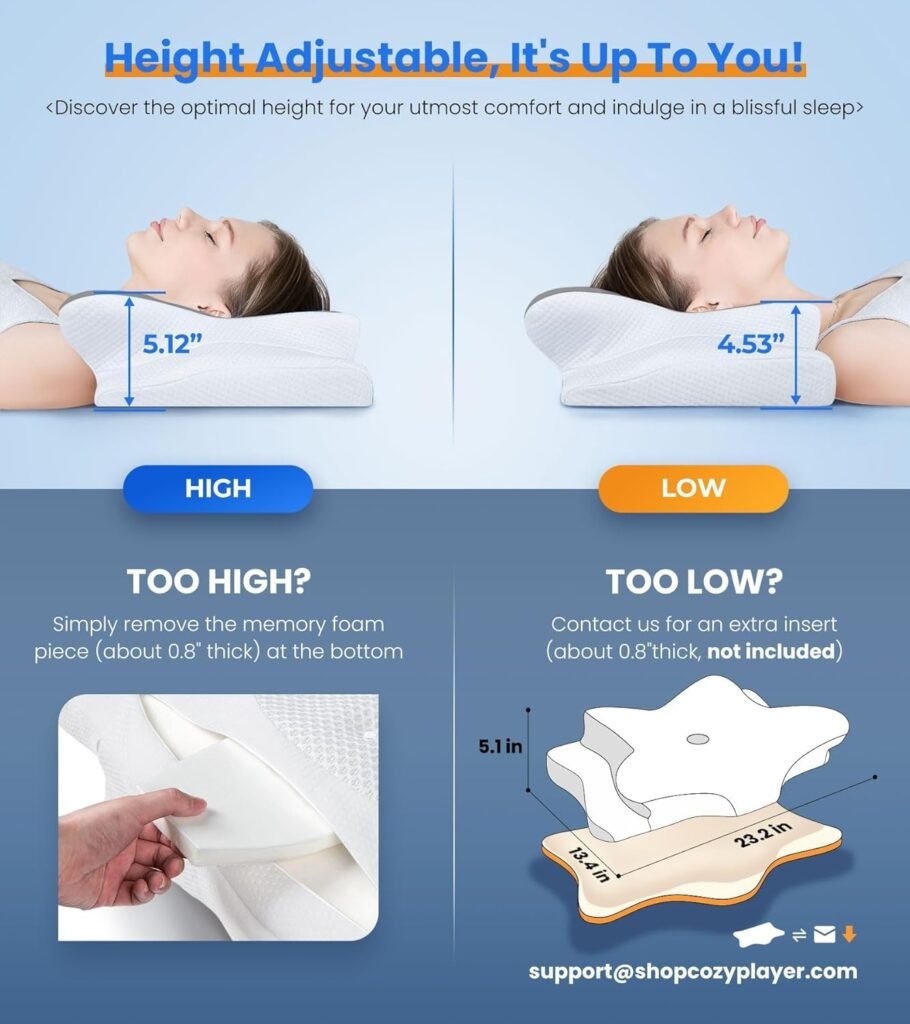
- Central support zone guidance — positioning your head and neck within the pillow’s marked center gives you the full benefit of the contour; it’s a small habit that makes a noticeable difference in how well the pillow does its job.
Who This Is Really For
You don’t need a diagnosed neck condition to benefit from better cervical support. If you:
- Wake up with a stiff or sore neck more mornings than not
- Deal with tension headaches that seem to start at the base of your skull
- Sleep on your side or switch positions through the night
- Spend your days hunched over a desk or a phone (so your neck is already under strain before bed)
…then the eight hours you spend horizontal are your best opportunity to undo some of that daily wear, not add to it.
The Bottom Line
Good sleep isn’t just about how long you’re in bed — it’s about whether your body actually gets to rest while you’re there. A pillow engineered around the real shape and needs of your neck, rather than a generic rectangle of stuffing, gives your spine the chance to do what it’s supposed to do overnight: relax, realign, and recover. If neck pain has quietly become part of your morning routine, it might not be your body telling you something’s wrong — it might just be your pillow.